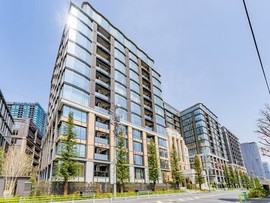
Japanese homes differ from Western layouts in three key ways: bathrooms and toilets are kept in separate rooms, living spaces are divided into distinct public and private zones, and traditional tatami rooms replace the open-plan living areas common abroad. Modern Japanese homes blend these traditions with open-plan LDK layouts and Western-style fittings.

Many people looking at Japanese property for the first time, either as a renter or buyer, are not aware that there are differences between their home country in the typical room types and their intended purposes. This article explores some of the most common features and introduces major differences between Japan and abroad.
What Does a Traditional Japanese Home Look Like?

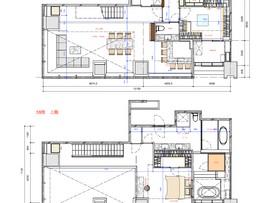
The first area we will look at is the living room. The floor plan above shows a typical, old, one-storey house. There is 1 bedroom, an i-ma (Japanese style living room), a kyaku-ma (Japanese style guest room), a kitchen and a bathroom in this house. Each room is separated by walls or fusuma (paper-covered slide doors and partitions). Most people are reminded of the Showa era (1926–1989) when seeing this typical Japanese-style house.
It is said that Japanese-style residences these days are based upon the Shoin-zukuri style from the Muromachi era (1336–1573), which was the turning point when aristocratic society turned into samurai society. Shoin-zukuri was a residence as well as a workplace of samurai, and since they regularly engaged in deal-making and negotiations to expand their power, their residences needed to have a public space for meeting people and a private space for their daily life. The typical Japanese house features traditional tatami flooring, sliding paper doors called shoji, and a distinct minimalist design aesthetic that showcases harmony with nature.
What Does LDK Mean? and How Does the Japanese Room Naming System Work?
LDK is the abbreviation used in Japanese real estate listings for a combined Living, Dining, and Kitchen space, an open-plan area that functions as the social heart of the home. Almost every modern Japanese home is described using this system, so understanding it is one of the first practical steps for anyone searching for property in Japan.
The number before LDK tells you how many separate bedrooms the property has. A 1LDK has one bedroom plus the combined living-dining-kitchen area. A 2LDK has two bedrooms. A 3LDK has three. The LDK space itself is always one open room shared between all occupants, regardless of the number of bedrooms.
Typical size ranges in Tokyo give a useful sense of what each type offers in practice. A 1LDK generally runs from around 30 to 55 square meters and suits singles or couples. A 2LDK typically falls between 55 and 75 square meters and works well for a couple with one child or two people who each need a separate room. A 3LDK, at roughly 70 to 90 square meters, is the standard family layout.
You may also see the abbreviation DK, Dining and Kitchen, without the L. This means the combined area is smaller and does not include a proper living room. DK layouts are more common in older buildings. The letter S, as in 1SLDK or 2SLDK, stands for a service room or storage room, a space that does not meet the legal definition of a bedroom because it lacks a window or sufficient floor area, but can sometimes be used as a study or small additional room.
One key difference from Western listings is that Japanese room counts exclude the LDK. A “3-bedroom apartment” in the US or UK sense would typically be listed as a 3LDK in Japan, three separate rooms plus the shared living-dining-kitchen area.
What Is the Kitchen Like in a Japanese Home?
Japanese kitchens are designed around efficiency and clean separation of tasks. In most modern apartments and houses, the kitchen sits within the open LDK area, with preparation and cooking space along one or two walls and the dining area directly adjacent. This layout makes it easy to cook and stay connected with the rest of the room, a practical feature for everyday family life.

Older homes may include a kamado, a traditional clay stove built into a raised cooking platform, though these are now rare outside of rural properties and heritage buildings. Modern Japanese kitchens are well equipped, typically featuring an induction or gas hob, a combination microwave, and a fish grill, a compact broiler built into the hob unit that is used for grilling fish and other foods. Full-sized ovens are less common in Japan than in Western countries, though they appear more regularly in larger and premium homes.
Premium developments in central Tokyo often feature imported European kitchen fittings, island layouts, and high-specification appliances as standard, reflecting the expectations of an international buyer and renter market.
Why Do Japanese Homes Have Separate Bathrooms and Toilets?
Japanese homes separate the bathroom and toilet into two distinct rooms, a design choice that surprises many people coming from countries where both are combined in a single space. The bathroom in Japan is considered a place to properly unwind, not just wash, and keeping it separate from the toilet reflects that distinct purpose.
The tradition has deep roots. During the Edo era (1603–1868), bathrooms and toilets were typically in separate outbuildings and shared among extended family members. The bathing ritual itself developed around shared hot water, family members would wash themselves thoroughly before soaking in the tub, keeping the water clean for the next person. This is why Japanese bathrooms are designed as wetrooms, with a shower area for washing separated from the soaking tub. The practice of washing before entering the bath remains common in Japanese homes today.
Keeping the toilet in a separate room also has a straightforward practical benefit: when one person is bathing, others can still use the toilet without any disruption.
Japanese toilets are worth noting in their own right. Most modern homes have a washlet, a toilet seat with a built-in bidet function. Higher-specification models also include heated seats, automatic flushing, and odour control, and are a standard feature rather than a luxury addition in new Japanese homes.
What Is a Tatami Room?
A tatami room, known in Japanese as a washitsu, is a traditional-style room floored with woven straw mats called tatami. Each mat is a standard size, historically used as a unit of room measurement, and the texture and scent of fresh tatami is considered one of the distinctive sensory experiences of a Japanese home.
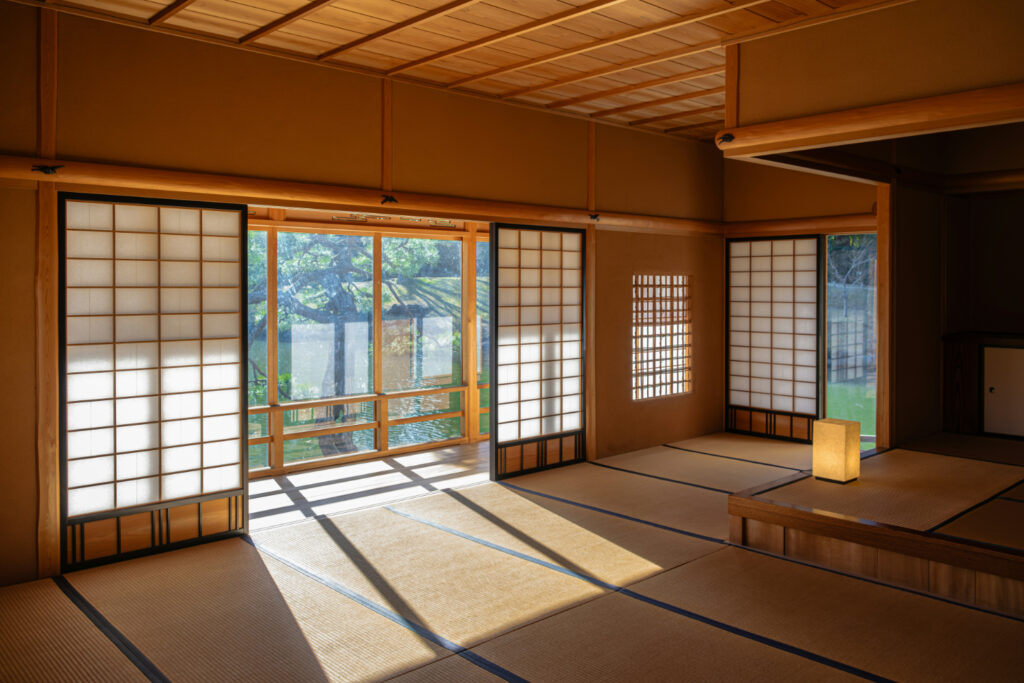
These rooms are versatile by design. They have traditionally served as sleeping areas, guest rooms, and spaces for tea ceremonies, and the tatami surface is well suited to sitting and lying directly on the floor. The tatami room often connects to the main living area through sliding doors, allowing the two spaces to be opened up or divided depending on how the room is being used.
In new developments, dedicated tatami rooms are less common than they once were, as buyers and renters increasingly choose an additional Western-style bedroom or a larger LDK instead. That said, some premium developments include a washitsu as a considered design feature, a quiet counterpoint to the open-plan living areas around it, and one that tends to be appreciated by people who spend time on the floor, whether for stretching, yoga, or simply relaxing.
What Is a Genkan? and Why Do Japanese Homes Have an Entry Foyer?
One of the first things visitors notice about a Japanese home is the genkan, a recessed entry area just inside the front door where shoes are removed before stepping into the main living space. This is not simply a cultural habit; it is built directly into the architecture. The genkan floor sits slightly lower than the rest of the home, creating a physical boundary between the outside world and the interior. Stepping up from the genkan into the hallway marks the transition into the home’s living space.
The practice of removing shoes at the entry has practical roots in Japan’s traditional use of tatami mats and raised wooden flooring, both of which would be damaged by outdoor footwear. Today, even homes with Western-style flooring throughout retain the genkan as a standard architectural feature. Most genkans include a getabako, a built-in shoe storage cabinet, directly beside or above the entry area, keeping footwear out of sight and the space tidy.
For people coming from countries where shoes are worn indoors, the genkan requires a small adjustment. In practice, most people find it straightforward and many come to appreciate the clear separation it creates between outdoor and indoor space. When viewing a property, the size and layout of the genkan is worth noting. A well-designed entry with sufficient shoe storage makes a meaningful difference to daily comfort, particularly in smaller apartments.
How Do Japanese Apartments Use Balconies?
Balconies are a standard feature of Tokyo apartment buildings and play a larger role in daily life than they might in other cities. Most units have at least one, and in taller buildings the views they offer, across the city, towards parks, or over Tokyo Bay, become a genuine part of the living experience.
Practically, balconies are used for drying laundry, which is common in Japan where tumble dryers are less widespread than in Western countries. Many people also use them for container gardening, a morning coffee spot, or simply as an extension of the indoor living area on warmer days. In luxury developments, balconies are often larger, finished to a higher standard, and designed with outdoor living in mind rather than purely as a utility space.
How Do Japanese Homes Handle Storage?
Japanese homes are well known for their practical approach to storage, with built-in solutions integrated throughout the property rather than left as an afterthought. The most traditional form is the oshiire, a deep closet with sliding doors, originally designed to store futons during the day and free up the floor space of a multi-purpose room. This same principle of concealed, built-in storage extends across the modern Japanese home, from hallway shoe cabinets to floor-to-ceiling bedroom wardrobes.
In newer developments and premium properties, storage design has become increasingly sophisticated, with walk-in wardrobes, under-stair storage, and custom-fitted systems that make the most of every room. For anyone moving from a home with large, dedicated storage rooms or a garage, it is worth assessing storage carefully when viewing a property, and worth reading our guide to Tokyo apartment layouts for more detail on how to plan a move effectively.
What Flooring Is Common in Japanese Homes?
Modern Japanese homes use a range of flooring materials depending on the room and the age of the building. Engineered wood and hardwood flooring are popular in living areas and bedrooms, offering warmth underfoot and a clean, contemporary look that suits both Japanese and Western-style interiors. Tiles are standard in bathrooms and kitchens for practical reasons. Carpet is used in some older buildings but has become less common in newer developments.
Tatami remains the traditional flooring of choice for washitsu rooms, and in properties that include one, the material is typically refreshed or replaced between tenancies. Some premium developments use high-quality natural tatami as a deliberate design statement, pairing it with modern fittings in a way that makes the contrast part of the appeal.

How High Are Ceilings in Japanese Apartments?
Ceiling height is another area where Japanese homes differ noticeably from those abroad. The average ceiling height in Japan used to be 220cm because people generally sat on tatami mats and the ceiling height was decided based on the eye level. As Japanese houses became more westernized, people’s lifestyles also changed and tatami was replaced by chairs and flooring. Japan’s Building Standards Act sets a legal minimum ceiling height of 2.1m for all habitable rooms, under Article 21 of the Act’s Enforcement Order. In practice, most new-build condominiums and houses use 240 cm as their standard height, which developers have converged on for air conditioning efficiency and general comfort.
How Has Japanese Home Design Changed Over Time?
Overseas, the living room is located close to the entrance of a house and visitors are shown into the living room first. Sofas and tables are placed in the living room, so this is where hosts welcome visitors. Additionally, the living room is often a hub of family life.

In contract to foreign residences, the functions of a Japanese living room is divided into i-ma (private space) and kyaku-ma (public space). Visitors can see the hallway first after going through the entrance, and the other private spaces are generally hidden. I-ma is considered to be a private space where family members can be themselves so that it tends to be located in the farthest from the entrance.
With the westernization of Japanese housing, there was a trend toward people choosing houses with an ousetsu-ma (guest room) rather than a kyaku-ma (Japanese-style public space). Nowadays, however, people think they don’t even need guest room much because they don’t often have guests, and they would rather use that space for other purposes, therefore the number of homes without a dedicated guest room has been increasing. The boundary between the living room and the Japanese-style i-ma is becoming less defined.
There is also a trend towards contemporary Japanese homeowners adapting traditional layouts to suit modern lifestyles, possibly integrating open-plan concepts or multifunctional spaces.
How Is Technology Changing Japanese Home Design?
Smart home technology has become a standard part of new residential construction in Japan, rather than an optional feature reserved for high-end developments. Security entry systems using keycard, PIN, or smartphone access are now common in new-build homes, and video intercom panels, allowing residents to see and speak with visitors from their phone, whether at home or elsewhere, are near-universal in new Japanese homes.
Home automation has moved into the mainstream alongside security. Many new homes include systems that allow lighting, air conditioning, and ventilation to be adjusted remotely via a smartphone app. As these systems have become more affordable and better integrated, they have shifted from a selling point to an expectation, particularly among international buyers and renters who are accustomed to connected home environments.
The connection between smart technology and energy efficiency is increasingly close. Integrated platforms that combine heating controls, energy monitoring, and security into a single system are now appearing in new residential developments across Japan, reflecting both consumer demand and the government’s broader push toward lower-energy homes. Japan’s smart home market was valued at approximately USD 7.6 billion in 2024 and is growing steadily, driven by IoT adoption, an ageing population with demand for assisted living technology, and national energy policy that rewards homes with strong efficiency credentials.
In premium properties, these systems are typically built in from the design stage rather than retrofitted after construction, and the specification of a home’s technology package, alongside its energy rating, is becoming a meaningful part of how buyers and renters evaluate a property.
Are Japanese Homes Energy Efficient?
Energy efficiency has become a significant part of how new homes in Japan are designed, built, and evaluated, and the standards are rising quickly.
The foundation is good insulation. Most new Japanese homes include double or triple-glazed windows, high-performance wall and roof insulation, and draught-sealed construction that reduces heat loss in winter and keeps interiors cooler in summer. These are not premium additions in new builds, they are standard features driven by government requirements that have been tightening progressively since the 1990s.
The most significant recent change came in April 2025, when compliance with Japan’s energy conservation standards became mandatory for all newly built homes under the revised Building Energy Efficiency Act. This means any home built from that point must meet defined thermal insulation and energy consumption standards. Previously, smaller residential buildings were exempt, that exemption no longer applies.
Looking further ahead, the Japanese government has set a target for all newly built homes to meet ZEH standard, Zero Energy House, or ゼッチ, by 2030. A ZEH home is designed to produce as much energy as it consumes on a net annual basis, primarily through solar panels combined with high-level insulation and energy-efficient appliances and heating systems. MLIT and the Ministry of Economy, Trade and Industry (METI) both support this program, and government subsidies are available for buyers and builders of certified ZEH properties.
Solar panels are now a common feature on detached houses in Japan, and battery storage systems, which allow households to store energy generated during the day for use in the evening, are becoming more common in both new houses and premium condominium developments.
For buyers, energy performance is increasingly a practical consideration as well as an environmental one. Homes that meet higher energy efficiency grades qualify for preferential mortgage rates under the Flat 35 loan programme administered by the Japan Housing Finance Agency, and new homes built after 2024 that do not meet energy conservation standards are no longer eligible for the housing loan tax deduction.
Finding the Right Home in Japan
Understanding how a Japanese home is arranged, and why, makes it much easier to find a property that suits how you actually live. The separation of public and private space, the dedicated bathroom and toilet rooms, the tatami areas, and the careful use of storage all reflect a design logic that has developed over centuries. These features are worth evaluating alongside more familiar considerations like transport access, floor area, and building age.
If you are looking for a home in Japan, whether a traditional layout or a Western-style property, Housing Japan’s multilingual team is available to guide you through the process. With over 25 years of experience in Tokyo real estate, we have helped buyers and renters from around the world find properties that suit their lifestyle. We have also been involved in the development of Western-style luxury homes in central Tokyo, including Gravitas Akasaka, Gravitas Minamiazabu, and Zenith Akasaka with more on the way.
FAQs on Japanese Home Layouts
What does LDK mean in Japanese homes? LDK stands for Living, Dining, and Kitchen, a combined open-plan space that forms the social heart of most modern Japanese homes. The number before LDK indicates the number of separate bedrooms. A 2LDK home, for example, has two bedrooms plus one shared living-dining-kitchen area.
Why do Japanese homes have separate bathrooms and toilets? In Japanese homes, the bath and toilet are traditionally kept in different rooms. The bathroom is considered a place for relaxing in a deep soaking tub, not just washing, so it is kept separate from the toilet for hygiene reasons and to allow multiple family members to use the facilities at the same time.
How big are luxury homes in Tokyo? Luxury condominiums in central Tokyo typically range from around 80 square metres for a well-appointed one or two-bedroom units to well over 200 square meters for larger residences in premium developments. Floor area varies significantly by building and location, and Housing Japan’s team can advise on what is currently available.
What is a tatami room and do new homes in Japan still have them? A tatami room, called a washitsu in Japanese, is a traditional-style room floored with woven straw mats. Tatami rooms have historically served as sleeping areas, guest rooms, and spaces for tea ceremonies. Dedicated washitsu are less common in new builds, though some premium developments include one as a deliberate design feature.
What is the ceiling height in a Japanese home? Japan’s Building Standards Act sets a legal minimum ceiling height of 2.1 metres for all habitable rooms. In practice, most new-build homes use 240 cm as the standard. Premium and luxury developments often go higher, with ceiling heights of 270 cm or above becoming an increasingly common feature.
Written by the Housing Japan Editorial Team – Housing Japan is a Licensed Real Estate Specialists in Central Tokyo with over 25 years of experience in luxury residential property.